
Traffic Management
AI traffic event detection, signal optimization, enforcement, and governance decisions
Background
Many urban traffic problems concentrate at intersections and critical road segments. Signal timing, channelization, and safety screening often rely on manual experience and fragmented data, making consistent, reviewable evaluation difficult.
Hanxing’s “Traffic AI Governance System” starts from public security traffic police operations, using a five-layer closed-loop architecture — “Sensing → Data → AI → Optimization → Control” — to build a city traffic AI brain, helping traffic authorities shift from “reactive response” to “proactive prevention.”
System Architecture: Five-Layer Closed Loop
| Layer | What It Does | The Change |
|---|---|---|
| Sensing | Integrates intersection cameras, signals, and flow data | From “one intersection at a time” to “full situational awareness” |
| Data | Standardized cleaning and classification | No more conflicting definitions |
| AI | Trained algorithms for auto-analysis and evaluation | Models that improve with use |
| Optimization | Outputs signal, channelization, and diversion plans | From guesswork to data-backed |
| Control | Plans executed, results verified in a loop | Did the change work? Data says. |
Core Capabilities
Intersection Safety Hazard Auto-Inspection
The system performs a “full physical” on intersections, auto-screening four hazard types:
- Violation analysis — Auto-statistics on intersection violations, generating governance reports
- Command conflict detection — Signal control data analysis to find signal transition gaps
- Channelization risk inspection — Identifies hazards from unreasonable lane design
- Regional safety hazards — Aggregates results for systematic governance
Smart Signal Timing Optimization
AI analyzes traffic flow, queues, and signal data to assist with optimization proposals, using simulation or limited rollout to give professionals evidence for final decisions.
Automated Violation Evidence
Through camera data analysis, the system auto-identifies and collects evidence for traffic violations, reducing manual workload and disputes.
Application Value
Efficiency
Throughput, queue length, average delay, and stop frequency can be compared before and after optimization, making improvement measurable and highlighting intersections or periods that need further adjustment.
Accident Reduction
Violation, conflict, channelization, and historical incident data help screen safety clues so limited field-review capacity can focus on higher-risk intersections and periods.
Cost Savings
Turning data access, periodic diagnosis, plan records, and outcome evaluation into platform capabilities reduces repeated extraction and reporting work while making external professional services easier to assess.
Fine-Grained Management
High-frequency data analysis — weekly signal timing suggestions, custom-cycle channelization comparisons, real-time hazard screening — achieving precision in operations, management, and data.
Why Hanxing
We build around traffic-police operating workflows rather than presentation screens. From intersection diagnosis to plan generation, execution, and verification, each step preserves professional review and measurable evaluation evidence.
System & Scenario Evidence
From Field Problems to Executable Scenarios
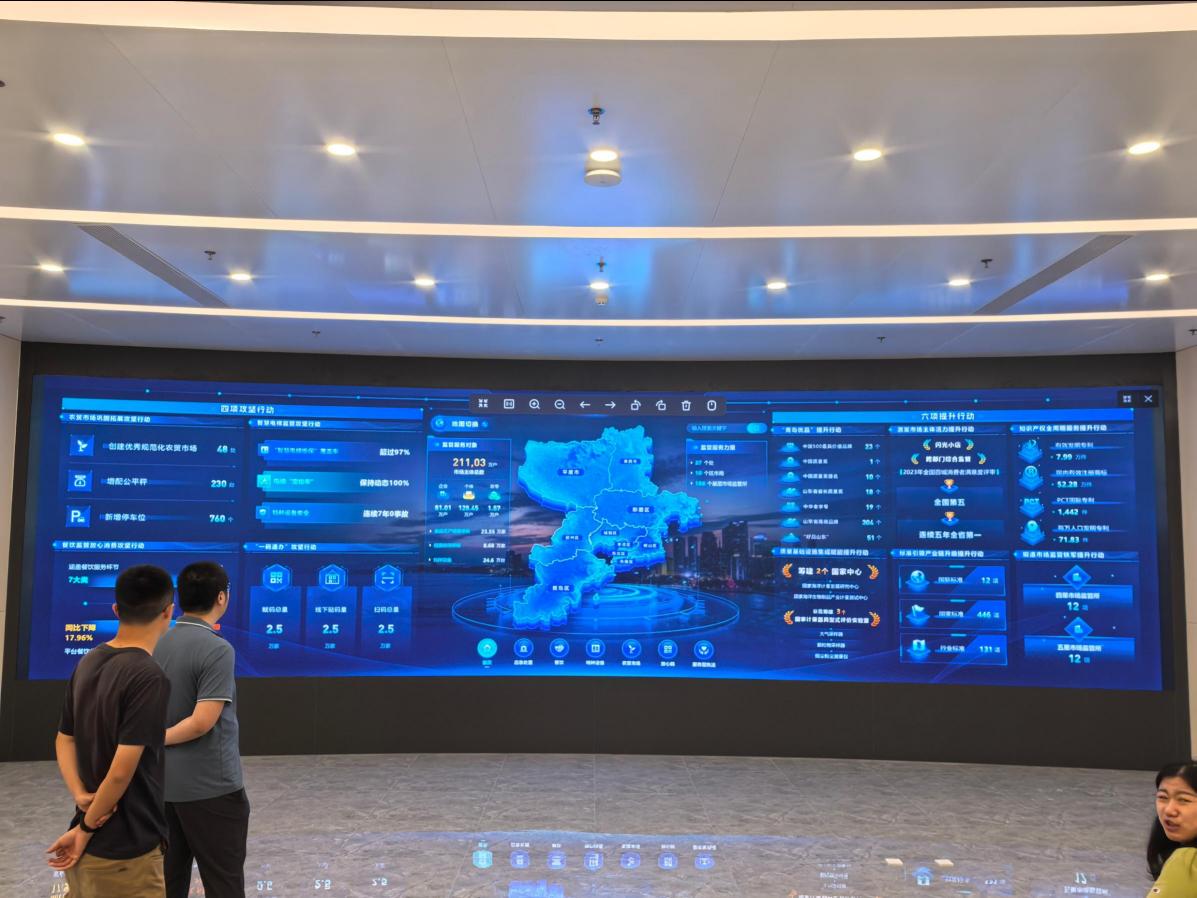
Platforms, equipment, and data are organized around real workflows, so every capability maps to a concrete operation and delivery outcome.
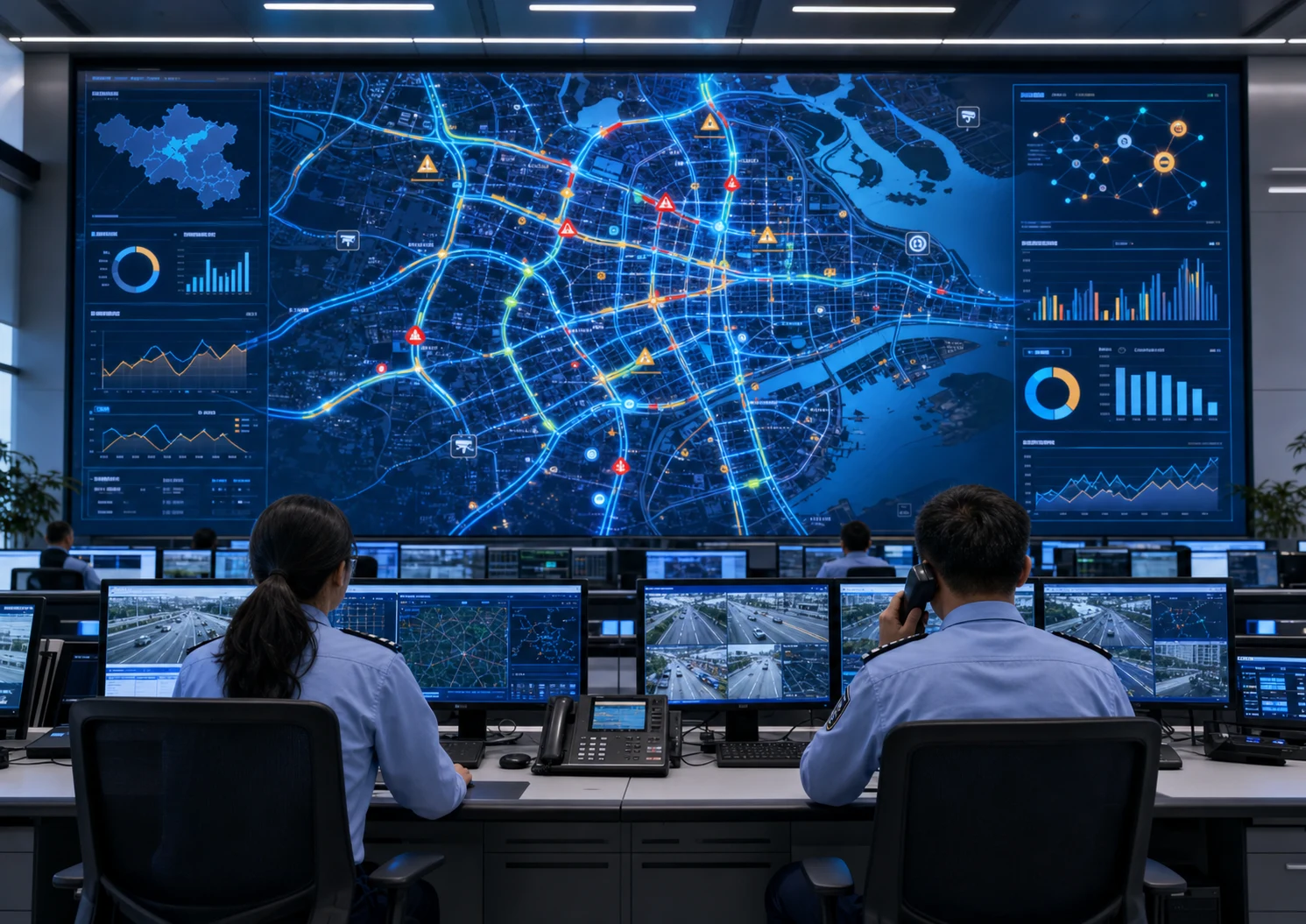
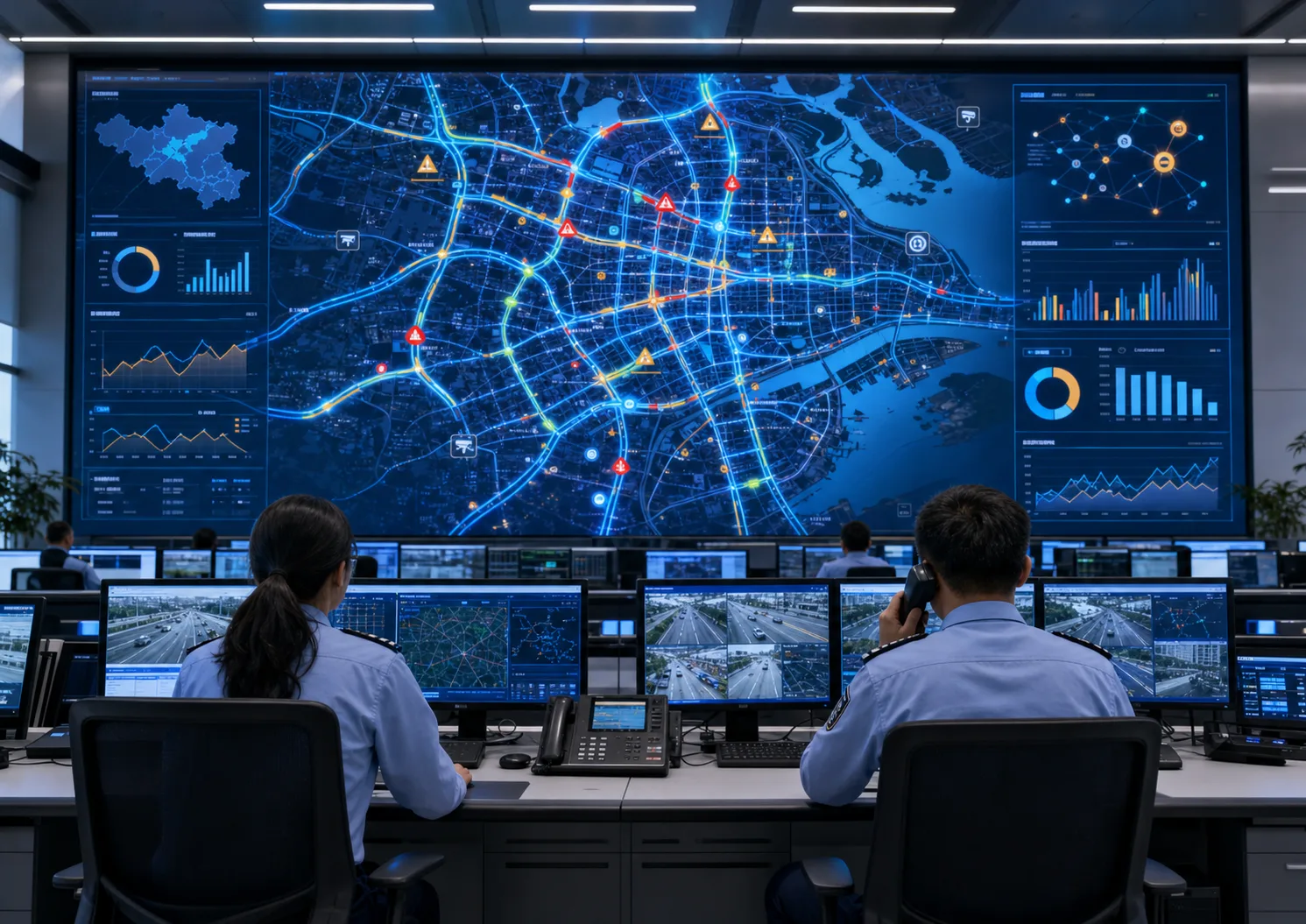
Put intersections, road segments, and events on one operating map
Traffic cameras, checkpoints, signal controllers, video, and flow data are connected through time and location. Operators can review conditions by area, intersection, period, and event type without repeatedly switching systems.
- Multi-source traffic access
- Intersection and road modeling
- Live operating picture
- Device health monitoring
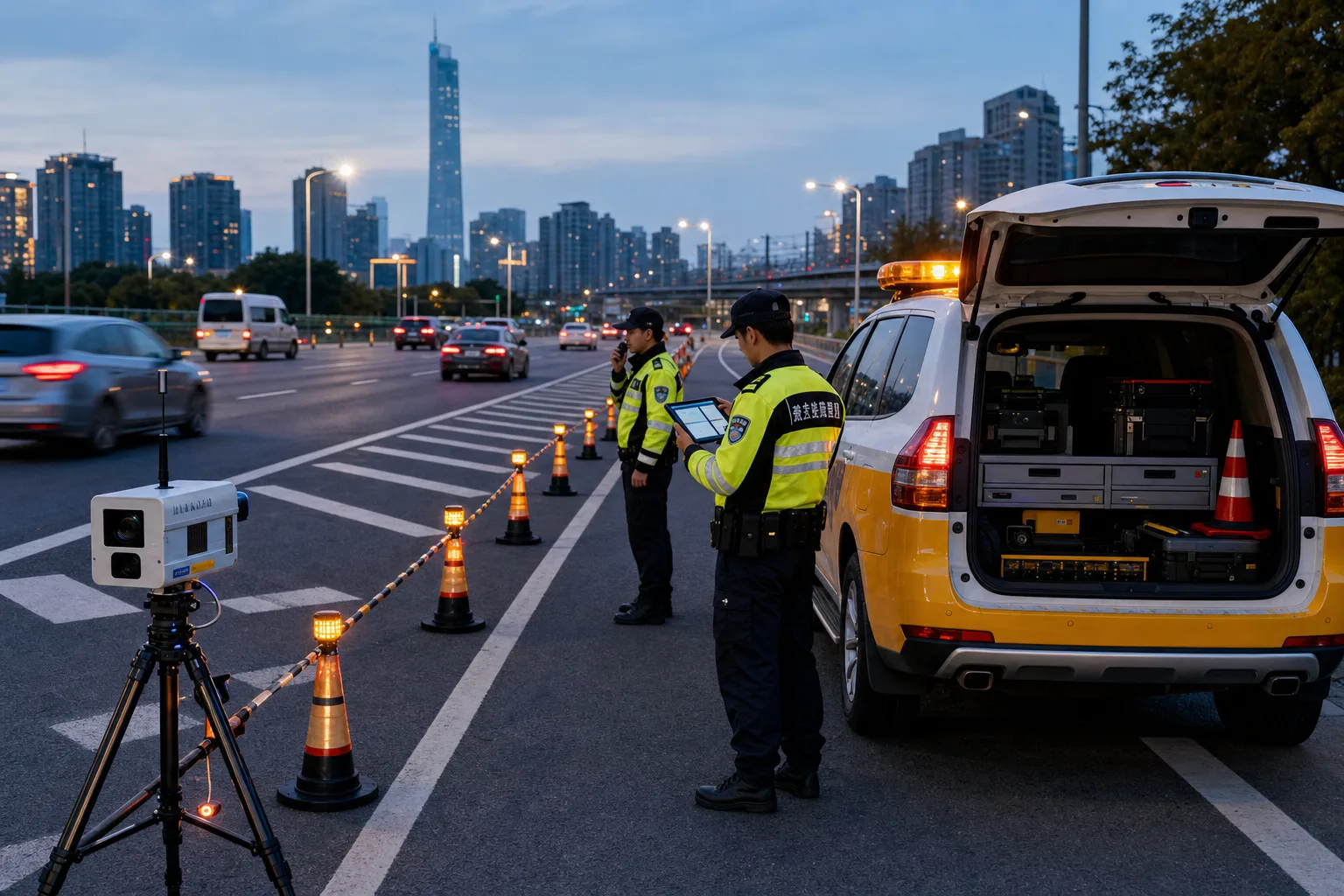
Let algorithms screen anomalies and professionals confirm action
Rules identify congestion, stopped vehicles, wrong-way movement, debris, and abnormal lane occupation. Location, duration, and impact create prioritized clues that people verify before command or enforcement workflows begin.
- Event recognition
- Clue prioritization
- Human verification
- Field-team coordination
Explain where congestion and conflict occur, and why
Flow, queues, signal plans, violations, and incident history support periodic intersection diagnostics. The system surfaces timing mismatches, channelization conflicts, and high-risk periods with evidence for professional review.
- Queue and delay analysis
- Signal-plan evaluation
- Channelization screening
- High-risk period discovery
Keep before-and-after evidence for every operational change
Professionally approved plans move into implementation while the platform compares flow, queues, delay, and events before and after adjustment. Underperforming changes can be traced to plans, parameters, and field conditions for another iteration.
- Assisted plan generation
- Professional approval
- Before-and-after comparison
- Governance records
How the Solution Lands
From scope and data interfaces to integration testing and acceptance, every project follows a traceable and maintainable delivery path.
Data connection
Connect video, signals, flow, and road-network data
Model calibration
Validate rules against local events and intersections
Plan execution
Review recommendations and coordinate implementation
Outcome evaluation
Compare indicators and continuously refine strategies
Project References & Solution Evidence
Based on Hanxing project materials, solution documents, and application scenarios. Sensitive customer information is intentionally omitted from the public site.
AI intersection diagnosis and governance
Flow, queue, signal, and violation data support periodic intersection diagnosis and produce timing, channelization, and safety recommendations for professional review.
Prepared from existing traffic AI governance product materialTraffic event discovery and coordination
After video analytics surface an event clue, operators verify its impact and dispatch field teams while response updates and closure results remain in one record.
Prepared from existing traffic command and field-response materialUrban signal-control optimization
Continuously collected flow data evaluates signal plans, which are tested in simulation or limited rollout before broader implementation and measured with before-and-after indicators.
Adapted from public intelligent-transport practices; not a Hanxing customer caseStart Your Digital Transformation Journey
Start with business goals and field constraints, then build an implementable, testable, and maintainable solution.
Contact Us